Actor headshots: the photos that land castings
Before they read a line of your CV, a casting director looks at your face. Your actor headshots are therefore the first audition — the one that happens without you, in a few seconds, on a screen. The point is not to prove you are photogenic, but to show clearly which roles you can play. Here is what a strong acting portfolio contains, how to prepare it, and the mistakes that cost you callbacks.
What is an actor's book, and what is it for?
An actor's book (or acting portfolio) is a short selection of professional photos that show you as you are today. It goes with your acting CV, your showreel and your video links when you submit to an agent or a production. Casting director Mylène Ragon puts it plainly in her advice published by Cast Prod: a complete package brings together photos, CV, showreel and links to your videos.
The difference with a modelling book is essential. A modelling book sells clothes, a silhouette, an image. Actor photos answer a simpler question: who is this person, and which "type" can they be cast as? The UK casting reference Spotlight stresses the same point: the casting director must recognise you when you walk into the room.
The must-have photos
The actor headshot
This is the main image — the one that appears next to your name on casting platforms and on your agent's site. Framed from the top of the head to the shoulders, vertical format, looking into the lens, neutral background, soft light with a catchlight in the eye. Plan two versions: one neutral and one with a slight smile.
The three-quarter and the full-length shot
A three-quarter shot (cropped mid-thigh) shows your posture, energy and silhouette. A full-length photo usefully completes the package: it gives a sense of your build, and many casting calls ask for it explicitly.
Looks and expressions
Add two or three portraits that show different registers: intensity, lightness, restraint. This is not about grimaces or played-out scenes, but about nuance. Spotlight advises a simple palette: a light smile, hair styled differently, a version with and without glasses if you wear them, and without a beard if you have one.
How many photos?
Recommendations converge on a short selection. Spotlight talks about four to six headshots on a profile; the studio Portrait Professionnel suggests eight to twelve images in total for a complete book. Six strong images beat twenty average ones: every weak photo weakens the set.
Colour or black and white? Which format?
Colour dominates today. Casting directors want to know the real colour of your eyes, hair and skin. Backstage even notes that a headshot only in black and white can make a book feel dated. One or two black-and-white images remain a nice counterpoint to emphasise facial structure — provided the main headshot is in colour.
On the file side, think digital first: light JPGs for email and platforms, a high-resolution version for press or production packs. Name your files with your surname and first name (for example SMITH_Jane_portrait.jpg), as Mylène Ragon recommends, and from the shoot onwards prepare crops that work as both square and vertical.
Style, natural look, wardrobe and makeup
The key word is natural. The headshot should look like you on casting day, not at an exceptional evening out. A few simple rules:
· Solid outfits, no patterns, logos or fine stripes. A T-shirt, a well-cut shirt, a simple sweater. Bring two or three tops in different colours.
· No character accessories: no hat, sunglasses or costume.
· Light makeup that evens the skin without masking it. Backstage warns against makeup that would make you unrecognisable.
· Your usual hair: the style you will wear to auditions.
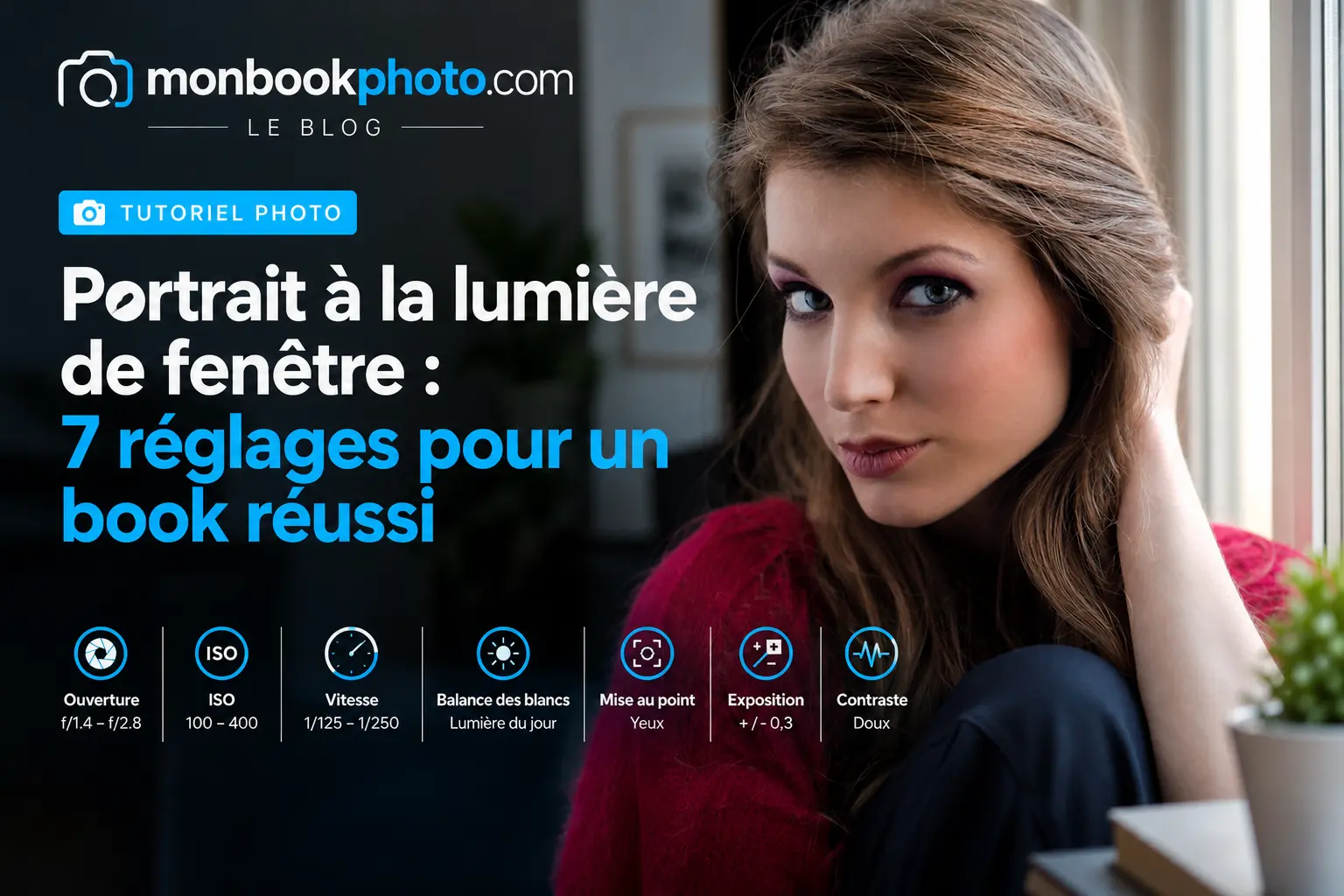
· Soft light and a neutral background, in studio or outdoors. Good window light is often enough for an honest portrait.
Keep retouching light
Every professional photo is retouched — lightly. You can remove a temporary blemish, a stray hair, tired under-eye circles, a distracting element in the background. Keep skin texture, freckles, expression lines and distinctive marks. In a Backstage article on retouching, overly smoothed skin immediately raises the question: "What are they hiding?" A casting that cannot trust the photo will not risk calling you in. Apparent age is a major casting criterion: retouching must not change it.
Preparing the shoot and choosing your photographer
Choose a photographer who has experience with actor books: a portraitist used to fashion or weddings does not necessarily have the same instincts. Look at their portfolios and check that the faces look alive, natural and varied.
Before the shoot:
· Agree with them on your two or three main types (the roles you are offered or aiming for).
· Gather a few reference images and your outfits.
· Sleep well, stay hydrated, avoid a haircut the day before.
· Ask what is included: duration, number of retouched images, delivered files, usage rights.
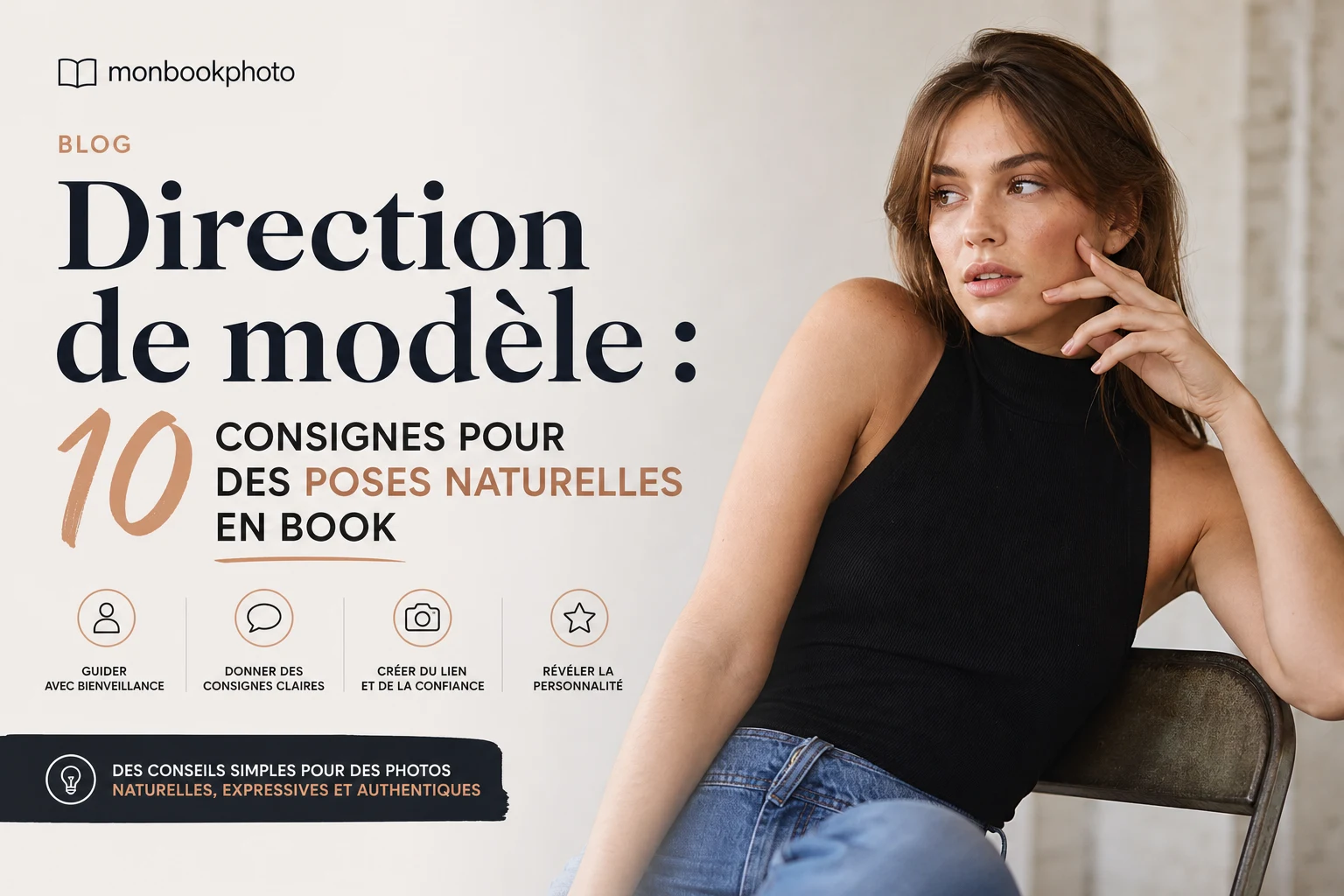
The price of an actor's book varies widely depending on the photographer, the city, the session length and the number of retouched images: request several detailed quotes and compare like for like. During the shoot, a good photographer talks to you constantly and guides you in small steps; our model-direction cues detail this method — useful on the actor's side too, so you know what to expect.
How often should you update your book?
As soon as your appearance changes: a new haircut or colour, a beard, a visible gain or loss of weight. Outside those changes, Backstage recommends renewing headshots every one to two years, Spotlight about every two years, and Mylène Ragon every two to three years. Keep the underlying rule: a photo that no longer looks like you costs you roles that fit your real age.
Where to use your actor headshots
· With talent agents, alongside your CV and showreel, then on their website.
· On casting platforms and sites, where the headshot is the thumbnail: it is what triggers — or kills — the click.
· In reply to casting calls, as JPG attachments (not PDF, advises Mylène Ragon), with the information requested: real age and playing age, height, skills, availability.
· On a personal online book, easy to share with a single link.
Classic mistakes
· Using a selfie, a holiday photo or an AI-generated image.
· Sending photos more than three or four years old, or that no longer match your look.
· Overplaying expressions or dressing as a character.
· Overdoing filters and retouching.
· Sending many average images instead of selecting the best.
· Submitting an entire book in black and white.
· Choosing a look that contradicts the roles you are offered.
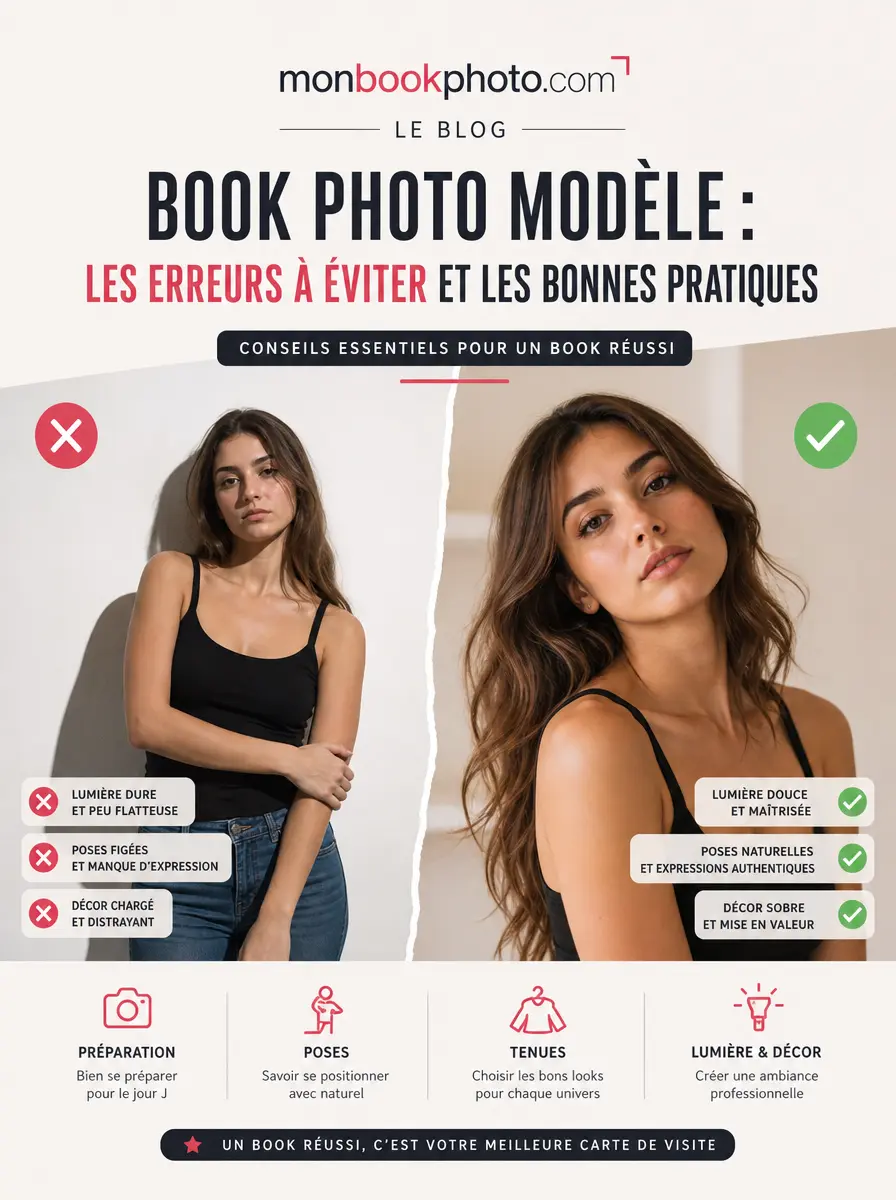
For more depth, our article on mistakes to avoid in a photo book expands this list from the model's side.
FAQ
How many photos belong in an actor's book?
Between six and twelve images depending on the use, including at least two headshots. On a casting platform, four to six varied headshots are enough.
Can you shoot your own actor headshots?
For a last-minute selfie a production asks for, yes. For the main book, an experienced photographer remains the most cost-effective investment: light, direction and selection make the difference.
Should you smile in a headshot?
Plan both: a neutral version and a lightly smiling one. The choice depends on the roles you are targeting.
Is black and white still accepted?
As a complement, yes. But the main headshot should be in colour.
Conclusion
A strong actor book is short, recent, natural and consistent with your types. A colour headshot, a three-quarter shot, two or three looks, discreet retouching: that is enough to make a casting director want to meet you. Once your photos are ready, showcase them in an online book: creating your book on Mon Book Photo lets you share them in one link with agents, photographers and productions.
Sources
· Cast Prod, advice from Mylène Ragon: https://castprod.com/les-conseils-dune-directrice-de-casting-pour-reussir-un-casting-figuration-ou-role/
· Spotlight: https://www.spotlight.com/news-and-advice/the-essentials/everything-you-need-to-know-about-headshots/
· Backstage, headshots: https://www.backstage.com/magazine/article/headshots-everything-need-know-5052/
· Backstage, retouching: https://www.backstage.com/magazine/article/factors-consider-retouching-headshots-6519/
Portrait Professionnel: https://www.portraitprofessionnel.fr/blog/book-photo-comedien/