Review: Canon EOS R8 Mark II — the compact full-frame that finally fills the gaps
by Philippe Hellendorff
•September 16, 2026•4 min read•1,212 views
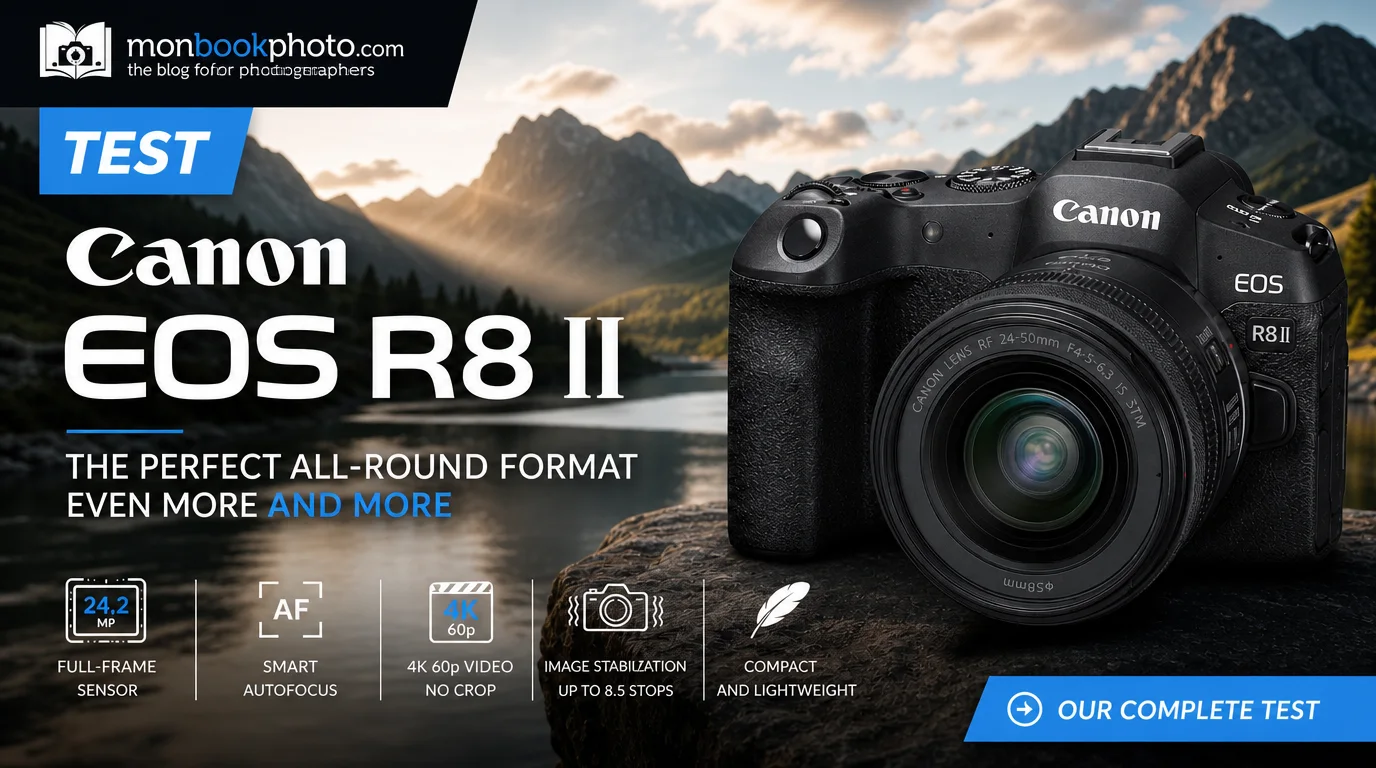
Announced on 15 September 2026, the EOS R8 Mark II succeeds the 2023 EOS R8. Canon keeps the 24.2 MP full-frame sensor and DIGIC X processor, but adds what was most missed: in-body stabilization, an AF joystick and oversampled 4K 60p video.
Review: Canon EOS R8 Mark II — the compact full-frame that finally fills the gaps
Announced on 15 September 2026, the EOS R8 Mark II succeeds the 2023 EOS R8. Canon keeps the 24.2 MP full-frame sensor and DIGIC X processor, but adds what was most missed: in-body stabilization, an AF joystick and oversampled 4K 60p video. The design changes markedly: sharper lines and a revised grip. Body-only price rises to USD 1,899.
The original R8 remains in the line-up at a lower price.
Canon's Radically Redesigned EOS R8 II Has IBIS, 4Kp60, and an AF Joystick | PetaPixel
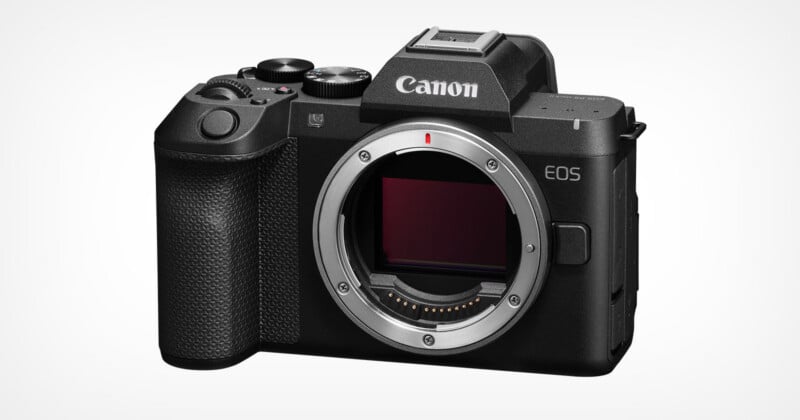
Dimensions: approximately 131.4 × 90 × 79.7 mm. Weight with LP-E17 battery and card: 546 g (versus 461 g for the R8). It is the lightest EOS full-frame body to include IBIS.
The new formal language is polarizing: more rectilinear than the R8, it recalls recent Sony or Nikon bodies more than classic Canon styling. The grip is more generous. An EC-G2 extension grip (about USD 99) thickens the hold without adding a battery.
A joystick (multi-controller) finally appears on the rear. The SD card slot moves to the side behind its own door instead of sharing the battery compartment. The rear screen remains a 3-inch vari-angle 1.62-million-dot panel; the 2.36-million-dot OLED viewfinder at 0.70× is unchanged. Weather sealing is improved.
LP-E17 battery life remains the weak point, especially for video.
Sensor, image quality and burst
24.2 MP full-frame CMOS sensor (shared with the R6 Mark II / original R8). Native ISO 100–102,400, expanded 50–204,800. No mechanical shutter: electronic up to 1/16,000 s, electronic first-curtain up to 6 fps.
Electronic burst: 40 fps, with about 0.5 s pre-capture (up to 20 frames before the shutter is fully pressed). Canon claims 30 % more continuous RAW frames and 58 % more JPEGs than the R8.
Image quality remains that of Canon’s already strong 24 MP sensor: comfortable dynamic range, well-controlled noise up to ISO 6400–12,800 depending on use. New downloadable colour filters and Filmtone profiles for stills and video.
Stabilization
This is the main addition. 5-axis IBIS, up to 7.5 stops at the centre and 7 stops at the edges, coordinated with IS lenses. For a body this size the gain is decisive: slower handheld shutter speeds, more usable telephotos, steadier video.
Autofocus
Dual Pixel CMOS AF II, 100 % coverage, detection of people / animals / vehicles, plus Register People Priority (up to 10 registered faces with ranking). Sensitivity down to –7.5 EV. Tracking is described as more tenacious than on the R8. The joystick genuinely changes AF-point selection.
Video
4K up to 60p, full width, oversampled from 6K
Full HD up to 180p
Canon Log 3, HLG, PQ
Slow & Fast modes
Recording tally lamp
No internal 6K RAW (reserved for the R6 Mark III and above). An optional XLR adapter is available. Heat build-up should be watched in extended 4K 60p.
Canon also offers Dual Pixel 3D Converter (Windows) to generate 3D photos or clips from Dual Pixel RAW or depth-tagged JPEGs.
Price and kits
Body: USD 1,899 / about GBP 1,729 / EUR 1,799–1,879
Kit with RF 24-50mm F4.5-6.3 IS STM: USD 2,099
Kit with RF 24-105mm F4-7.1 IS STM (some markets): about GBP 2,119
Availability: late October 2026 (around 20–29 October depending on country).
Verdict
Strengths
IBIS at last, joystick, oversampled 4K 60p, pre-capture, reliable AF, still modest weight, colour filters.
Limitations
LP-E17 battery too small, single SD slot, unchanged EVF and screen, polarizing design, no mechanical shutter, average video endurance, USD 400 premium over the original R8 launch price.
The EOS R8 Mark II does not reinvent the sensor, but it transforms the shooting experience. It is now a coherent entry-level full-frame for travel, light reportage and hybrid video, provided one accepts the small battery and angular look. Against the Nikon Z5 II or a used Sony A7 IV, it bets on compactness and the RF ecosystem.
For R8 owners, the upgrade is justified mainly by IBIS and the joystick. For a first Canon full-frame in 2026, it is one of the more balanced options under USD 2,000.
Annoncé le 24 septembre 2026, le Nikon Z5IIC reprend le capteur et le processeur du Z5 II dans un boîtier plus plat, sans viseur électronique. Voici ce qu’il offre vraiment, et à quel prix.
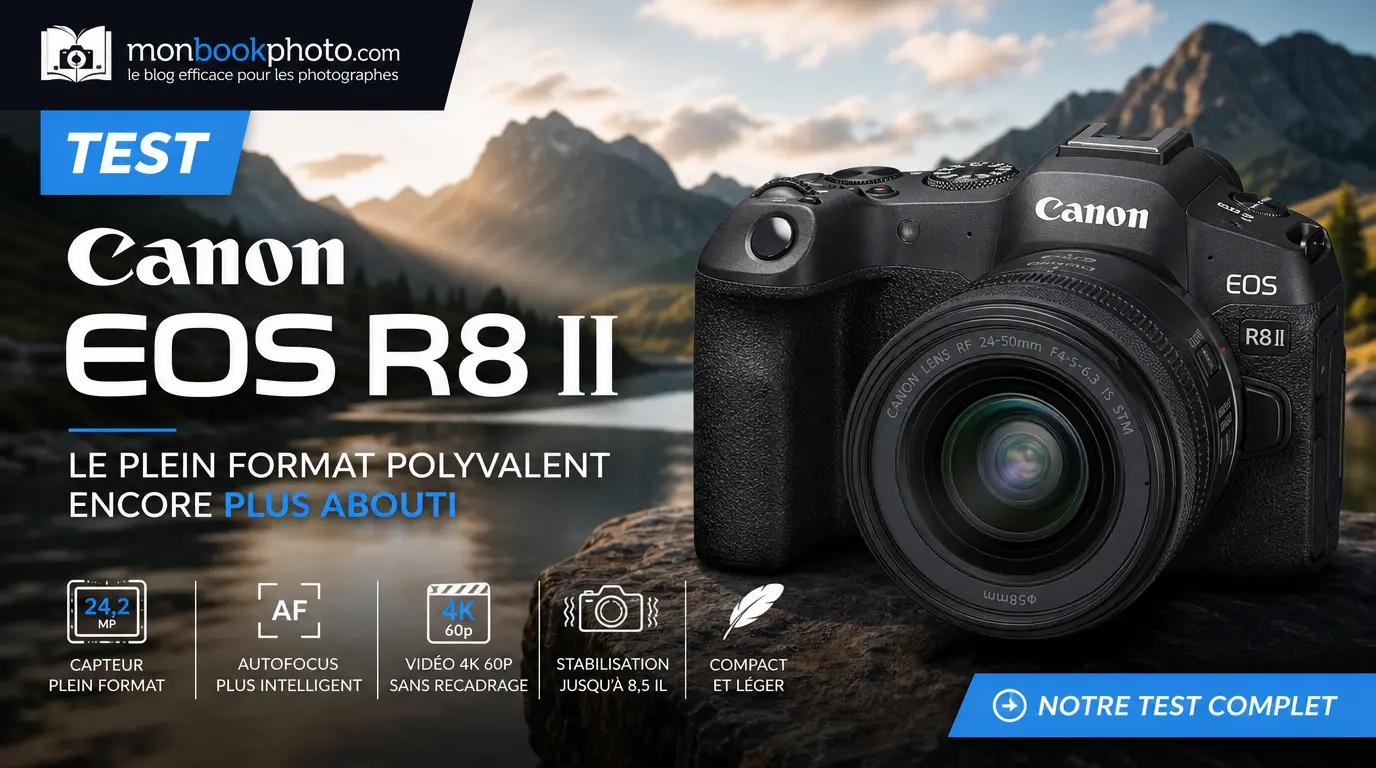
Annoncé le 15 septembre 2026, l’EOS R8 Mark II succède à l’EOS R8 de 2023. Canon conserve le capteur 24,2 Mpx plein format et le processeur DIGIC X, mais ajoute ce qui manquait le plus : la stabilisation dans le boîtier, un joystick AF et une vidéo 4K 60p suréchantillonée.